

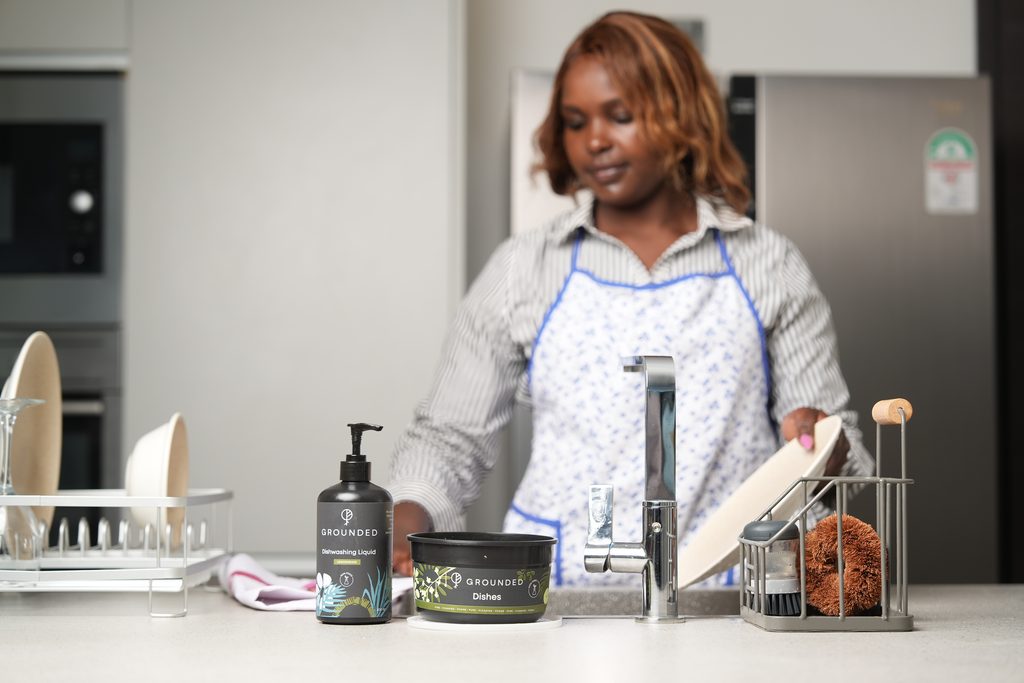
A practical guide for Kenyan kitchens, with Angela of Grounded and Pauline from VituZote.
Grounded × VituZote — The Non-Toxic Kitchen Edit
Kitchens don’t stay clean for long. Not really. There’s always a mug in the sink, flour on the counter, or a pan that needs one more scrub before bed. Most of us don’t want a chemistry lecture; we just want the kitchen to feel clean and to trust what we’re cleaning it with.
That’s the real story behind “non-toxic cleaning” — not the buzzword, but what’s actually happening when you wipe down a counter or wash a pot.
We put the question to two people who think about it from different angles: Angela Grounded’s in-house expert , and Pauline from Vitu Zote, who spends her days with the tools and materials sitting in your kitchen right now. Between the two of them, the picture gets a lot clearer.
What does “non-toxic” actually mean?
Here’s the thing about labels like “non-toxic,” “natural” and “eco-friendly” — they don’t mean the same thing on every bottle. One brand’s definition isn’t another’s. So rather than trusting the front label, Angela suggests asking a few sharper questions:
- What’s actually inside?
- What was it made to clean?
- How is it meant to be used?
- Does it need diluting, or a rinse after?
- Is it right for the surface you’re about to use it on?
So, does non-toxic cleaning actually work?
For everyday kitchen cleaning, a well-formulated cleaner can deal effectively with grease, fingerprints, food residue and ordinary grime. But the product is doing less of the work than you’d think. The rest comes down to:
- The surface
- What kind of mess you’re dealing with
- How much product you use
- How long you let it sit
- The temperature of your water
- The cloth, brush or tool in your hand
Angela’s rule of thumb: match the product to the job. A dishwashing liquid isn’t a surface spray. A surface spray isn’t a scouring product. And none of them are a disinfectant. Reaching for more product isn’t a shortcut either. Use the recommended amount and give the product the appropriate time to work according to its directions.
Care for what you love
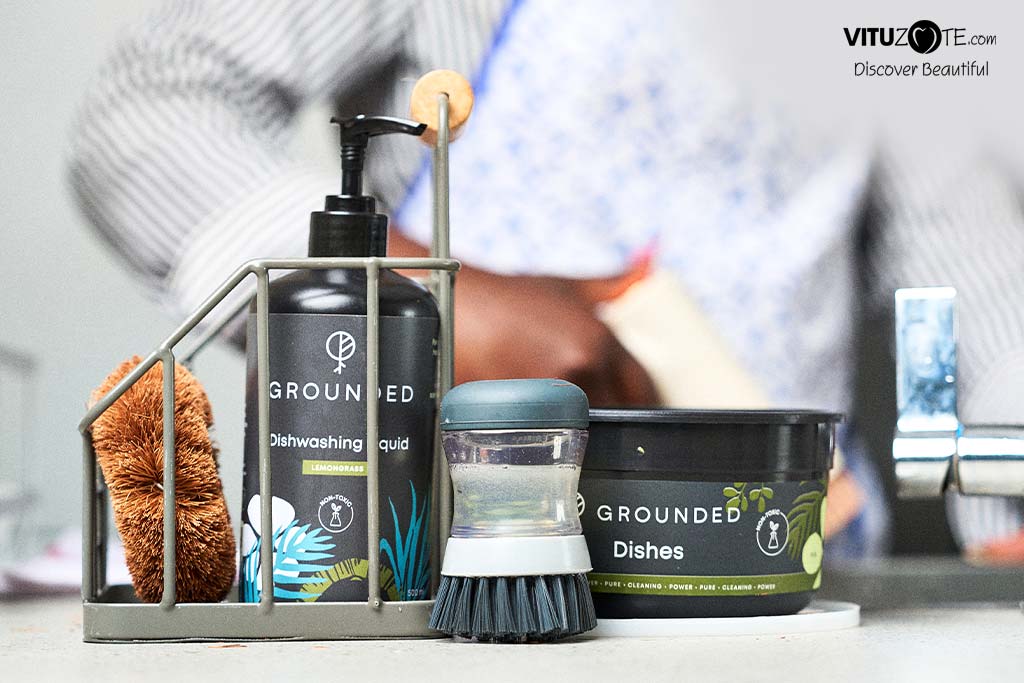
The clearest way to see how Grounded and Vitu Zote fit together is to look at the things sitting on your counter right now.
For each one, Pauline covers what the material needs. Angela covers what to clean it with
The cleaner is only half the job
Pauline sees this mistake constantly: people obsess over what’s in the bottle and completely forget what’s in their hand. A wooden board, a non-stick pan, a stainless pot, a stand mixer, none of them want to be cleaned the same way. Material matters. Finish matters. And so does the tool doing the scrubbing.
- A brush that’s gentle enough for one surface might do nothing on another.
- A scrubber tough enough to shift baked-on residue off a stainless pot could just as easily wreck a delicate coating. This is where the right kitchen tools earn their keep.
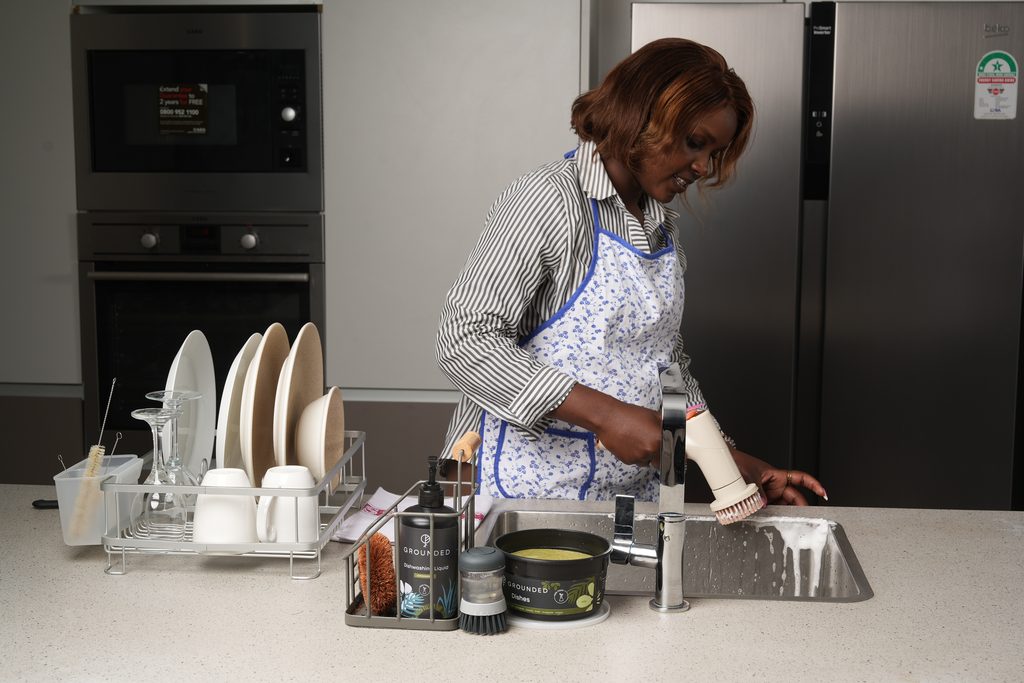
- A proper dish brush gives you controlled scrubbing without guesswork.
- A bottle brush gets into the narrow spots your fingers can’t reach.
- A sink tidy means your brushes actually dry between uses instead of sitting in a soggy pile.
- A coconut fiber scourer works where a sponge won’t.
- And a dish drainer means washed items dry properly, instead of turning into permanent counter clutter.
It’s not about owning more cleaning gear. It’s about having the right piece for the job in front of you.
Cleaning and Disinfecting Are Not the Same Job
Cleaning lifts dirt, grease and everyday grime. Disinfecting is a separate step used when there is a specific need. You reach for it after handling raw meat, or when someone in the house is unwell, not as a daily habit.
Angela’s advice: don’t treat every wipe-down like a hospital-grade job. Use an everyday cleaner for everyday mess, and save the disinfectant for when the moment genuinely calls for it, following the instructions on the label, every time.
Wooden Chopping Boards & Utensils
Pauline / VituZote
Wood hates sitting in water. Wash boards soon after use, skip the soak, and stand them up to dry so air moves around them. Oil periodically with an appropriate food-safe board oil, following the board maker’s care guidance.
Angela / Grounded
A mild, food-contact-safe wash does the job just rinse well. The goal is clean, not stripped: you don’t want to pull the natural oils out of the wood along with the mess.
Non-Stick Cookware
Pauline / VituZote
The coating is the whole point, so treat it gently. Skip abrasive tools unless your manufacturer says otherwise, and use a soft sponge or brush. If something’s stuck, don’t just scrub harder.
Angela / Grounded
Giving the appropriate product time to work, then using a suitable non-scratch tool, is usually better than simply scrubbing harder.
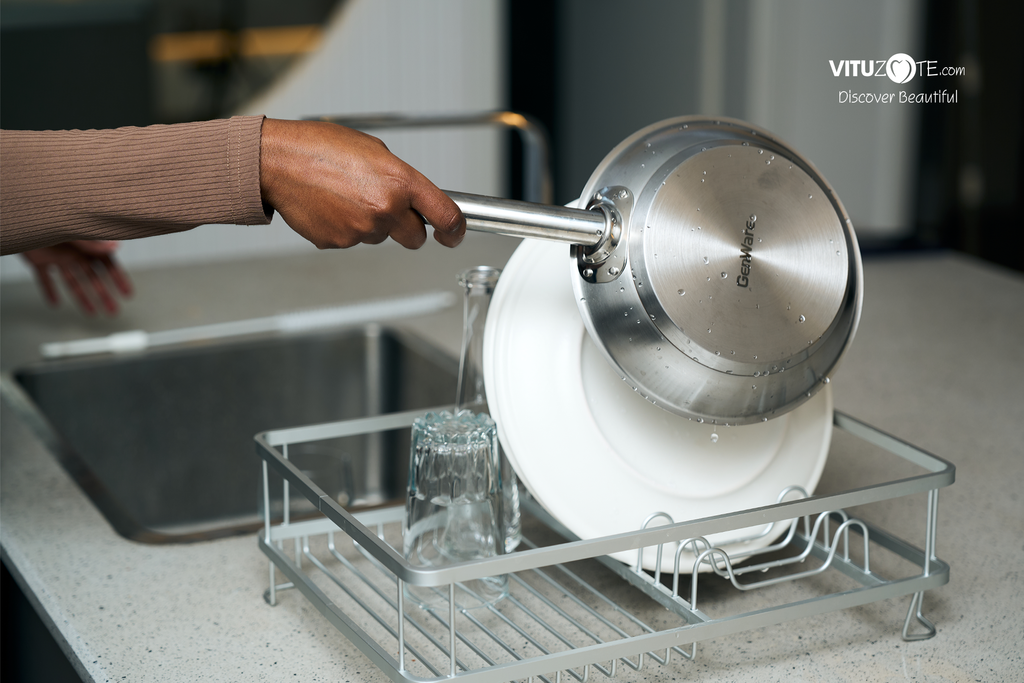
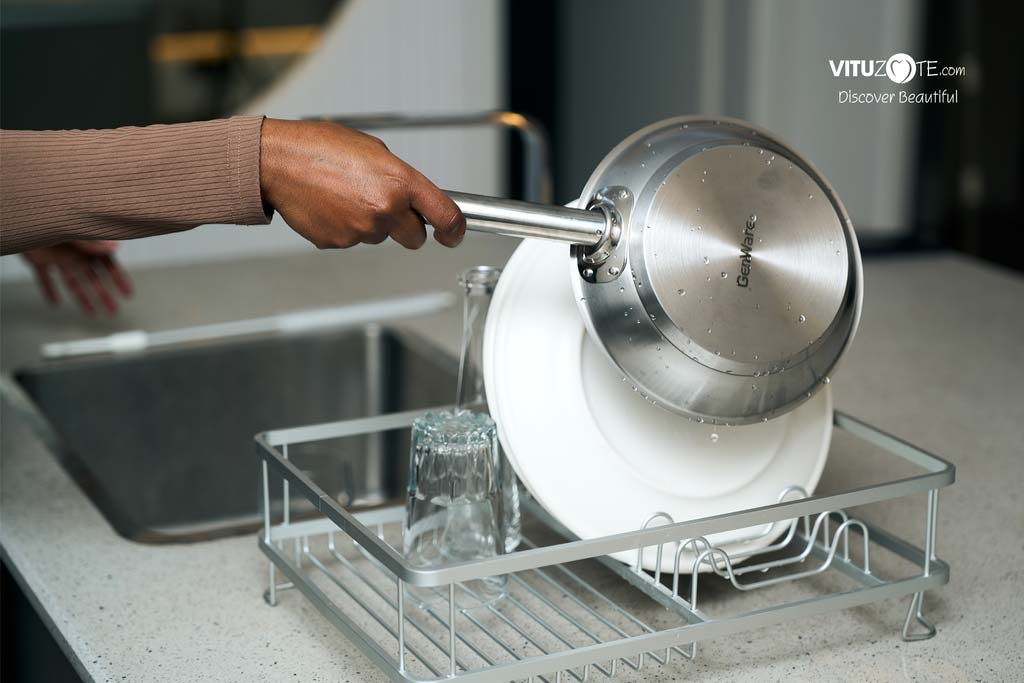
Stainless-Steel Cookware
Pauline / VituZote
Stainless is tough, but not scratch-proof. Stick to non-abrasive tools for daily cleaning, and dry it properly to avoid water marks. If there’s a directional finish, clean with the grain.
Angela / Grounded
For heavier cooking residue, reach for a product built for the job rather than just piling on more dishwashing liquid. And always check it’s actually suited to that finish first.
Stand Mixers & Small Appliances
Pauline / Vitu Zote
Start with the manufacturer’s instructions, every time. Unplug before you clean. Wipe the outside never submerge the base and keep any liquid well away from vents, switches and the motor. Bowls and attachments follow their own care instructions
Angela / Grounded
A gentle surface clean is usually all the exterior needs. Skip the heavy scrubbing, and never spray directly near openings or anything electrical.
Glassware & Tableware
Pauline / VituZote
Everyday glasses and dishes just need a gentle wash. Handle glass carefully, and avoid sudden temperature changes too, correct handling is just as important as the cleaner you use.
Angela / Grounded
Warm water, the right brush or sponge, and a suitable dishwashing product will handle normal food residue easily. Piling on extra product won’t get you cleaner glasses
The Sink & High-Touch Kitchen Surfaces
Pauline / VituZote
The sink works harder than almost anything else in the kitchen. Don’t just wipe the basin check the drain, the strainer, the overflow, the tap and the edges too. Give your brushes somewhere to actually drain and dry.
Angela / Grounded
An everyday surface cleaner covers ordinary spills and grime. Bring in a dedicated disinfectant only when the moment calls for it, follow the directions, and test first on anything delicate natural stone, wood, or a finish you’re unsure about.
Before you clean it, ask five questions.
- What’s this actually made from?
- What does the manufacturer say to do?
- What cleaner or tool actually suit this job?
- Am I cleaning or disinfecting?
- Should I test a small, hidden spot first?
A cleaner kitchen doesn’t require a cupboard full of different or unnecessarily strong products. Looking after the things you love doesn’t need to be complicated. It just needs the right product, the right tool, and a little know-how.
Grounded brings formulation and cleaning expertise. Vitu Zote brings product, material and tool knowledge. Together, we help you match the right cleaner, the right tool and the right method to the things you use every day.
BUY BETTER. CARE BETTER. KEEP IT LONGER
General care guidance only.
Always follow the cleaning-product label and the manufacturer’s care instructions for your appliance, cookware or surface.
Partnership by: